If you are wondering what are 3 things that cannot be recycled, the most common answers are plastic bags, disposable coffee cups, and drinking glasses or ceramics.
These items often look recyclable, but most curbside recycling programs in the United States are not equipped to process them.
Knowing which products belong in the recycling bin is important because incorrect items can contaminate recyclable materials, damage sorting equipment, and increase processing costs.
This article explains why these three commonly misunderstood products are usually not recyclable, why people mistake them for recyclable items, and what you can do with them instead.
Recycling rules vary by city, county, and waste provider, so always check your local program before placing an unfamiliar item in the bin.
1. Plastic Bags and Plastic Film
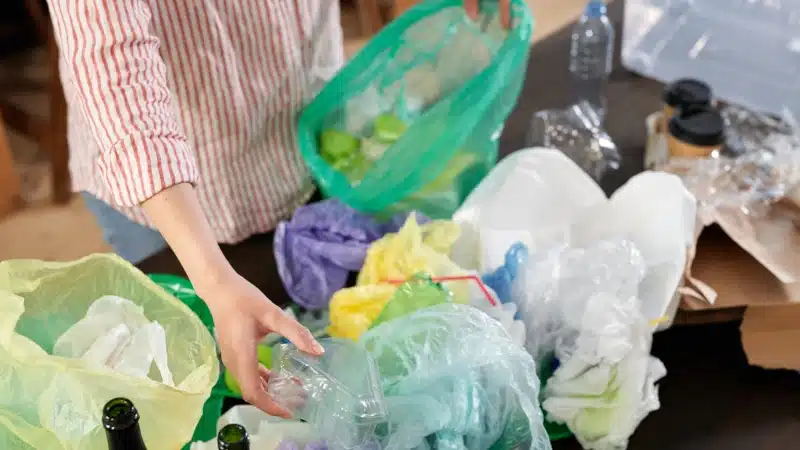
Plastic grocery bags, produce bags, bread bags, and other flexible plastic films usually cannot go in curbside recycling bins.
The main problem is their shape and flexibility. At a materials recovery facility, plastic bags can wrap around conveyor belts, screens, and other sorting equipment. Workers may need to stop the machinery and remove the tangled plastic by hand.
Many people assume plastic bags are recyclable because they are made from plastic and may have a recycling symbol or number printed on them.
However, a recycling symbol does not guarantee that an item is accepted by a local recycling program.
The number usually identifies the type of plastic resin, not whether the product can be processed through curbside collection.
What can you do with plastic bags?
Clean and dry plastic bags may be accepted at participating grocery stores and retailers that offer plastic film collection. These programs are separate from household curbside recycling.
Depending on the program, accepted items may include:
- Grocery bags
- Produce bags
- Bread bags
- Newspaper sleeves
- Clean plastic shipping envelopes
- Product overwrap
- Some resealable storage bags
Remove receipts, labels, food residue, and other materials when required. Do not place a bag in a store collection bin unless the posted instructions confirm that it is accepted.
Reusable shopping bags can also reduce the amount of plastic film you use. Keep them in your car, near the front door, or with your shopping supplies so they are easier to remember.
2. Disposable Coffee Cups
Most disposable paper coffee cups are not accepted in standard curbside paper recycling.
Although the outside of the cup looks and feels like paper, the inside usually contains a thin plastic lining. This lining prevents hot or cold liquids from soaking through the cup, but it also makes the paper more difficult to recover.
Many paper mills and recycling facilities cannot easily separate the plastic layer from the paper fibers.
Coffee, cream, sugar, and other residue can create additional problems. Food and liquid contamination may reduce the quality of recovered paper or cause the cup to be rejected during processing.
The misunderstanding comes mainly from the cup’s appearance. Since it resembles cardboard or thick paper, people often assume it belongs with newspapers, boxes, and office paper.
Labels such as paper cup, plant-based, compostable, or recyclable can make the decision even more confusing.
Some US recycling programs accept certain paper cups, but this is not a universal rule. Only place a disposable cup in the recycling bin when your local waste provider clearly lists it as an accepted item.
What can you do with disposable coffee cups?
Different parts of a coffee cup may need to be handled separately:
- Cup: Usually trash unless your local program accepts coated paper beverage cups.
- Plastic lid: May be recyclable in some regions, depending on its size and plastic type.
- Cardboard sleeve: Often recyclable when it is clean and dry.
- Straw or stirrer: Usually trash because these items are too small for sorting equipment.
- Compostable cup: Only suitable for compost collection when a local commercial facility specifically accepts it.
A reusable travel mug is usually the simplest way to avoid disposable cup waste. Many coffee shops allow customers to bring a clean reusable cup, and some businesses offer a small discount.
3. Drinking Glasses, Ceramics, and Broken Dishes
Glass bottles and jars are commonly recyclable, but drinking glasses, ceramic mugs, plates, bowls, and oven-safe glass usually are not.
These products are manufactured differently from glass food and beverage containers.
They may contain different ingredients, coatings, or heat-resistant materials. Because of these differences, they can melt at different temperatures during glass processing.
When ceramics or heat-resistant glass are mixed with bottle and jar glass, they may not melt properly. Small pieces can remain in the recycled material and weaken newly manufactured glass containers.
The misunderstanding comes from using the word glass as though it describes one uniform material.
A drinking glass and a pasta sauce jar may look similar, but they are not necessarily compatible with the same recycling process.
Items that generally should not go in curbside glass recycling include:
- Drinking glasses
- Wine glasses
- Ceramic mugs
- Plates and bowls
- Oven-safe cookware
- Mirrors
- Window glass
- Crystal
- Light bulbs
- Glass vases
- Ceramic plant pots
What can you do with unwanted glasses and dishes?
Usable glasses, dishes, and mugs can often be donated to thrift stores, community organizations, schools, shelters, or local reuse centers. You can also offer them through neighborhood sharing groups.
Chipped or mismatched dishes may be reused as plant saucers, organizers, craft materials, or decorative pieces. Broken ceramics can sometimes be used in mosaics, although sharp edges must be handled carefully.
Items that cannot be reused usually belong in the trash unless a local specialty collection program accepts them. Wrap sharp pieces securely and follow your waste provider’s instructions for broken glass.
Why These Three Items Usually Cannot Be Recycled
When people ask what are 3 things that cannot be recycled, plastic bags, disposable coffee cups, and household glassware are useful examples because each item causes a different recycling problem.
Plastic bags can tangle sorting equipment. Coffee cups combine paper with a bonded lining. Drinking glasses and ceramics have a different composition from recyclable glass bottles and jars.
The important lesson is that an item’s general material is not the only factor that determines whether it can be recycled. Its size, shape, coatings, material combinations, local processing equipment, and available recycling markets also matter.
Other Items That Are Often Not Recyclable
Several other household products are frequently placed in recycling bins even though many US programs do not accept them.
Plastic Utensils
Plastic forks, spoons, and knives are usually too small and irregularly shaped for sorting equipment. They may also be made from different types of plastic that are difficult to identify.
Most plastic utensils belong in the trash unless a specialty program accepts them. Reusable utensils are a more practical option for reducing waste.
Plastic Straws
Plastic straws are light, narrow, and too small for most sorting systems. They can fall through screens or become mixed with other materials.
Reusable straws may reduce waste, although disposable flexible straws remain important for some people with disabilities or medical needs.
Shredded Paper
Small pieces of shredded paper can scatter around a recycling facility or fall through sorting equipment. Some communities accept shredded paper in a labeled paper bag, while others do not accept it at all.
Check your local guidelines before recycling shredded documents. Shred only materials that contain sensitive personal or financial information.
Thermal Receipts
Many store and restaurant receipts are printed on thermal paper with a chemical coating. This coating can make the receipts unsuitable for recycled paper products.
Thermal receipts usually belong in the trash unless your local recycling program says otherwise. Choosing digital receipts can help reduce this type of waste.
Black Plastic Containers
Some recycling facilities use optical scanners to identify and separate plastic. Certain black plastic products can be difficult for these scanners to detect.
Local markets for black plastic may also be limited. Check your community’s rules before placing black takeout trays, plant pots, or food containers in the recycling bin.
Foam Packaging
Expanded polystyrene foam, often called Styrofoam, is rarely accepted through curbside recycling. It is lightweight, bulky, easily broken, and expensive to transport compared with its value as a recovered material.
Some specialty drop-off locations accept clean foam blocks. Shipping stores may also reuse packing peanuts.
Padded Mailing Envelopes
Paper envelopes with plastic bubble lining contain more than one bonded material. Since the paper and plastic are difficult to separate, these envelopes are often unsuitable for both paper recycling and plastic film collection.
Some all-plastic mailers may qualify for retailer film drop-off programs after labels are removed. Follow the instructions printed on the package and those provided by the collection site.
Takeout Containers
Takeout containers may be made from plastic, aluminum, foam, coated paper, molded fiber, or compostable materials. Their recyclability depends on the material, shape, cleanliness, and capabilities of the local recycling facility.
A recycling symbol on a takeout container does not guarantee local acceptance. Food residue can also prevent an otherwise accepted container from being recycled.
Aerosol Cans
Some programs accept completely empty metal aerosol cans, while others require them to be taken to a separate collection location.
Aerosol cans containing paint, pesticides, automotive products, or hazardous chemicals may require household hazardous waste disposal. Never puncture, crush, or burn an aerosol can.
Batteries
Batteries should not be placed in a household recycling bin. Lithium-ion batteries are especially dangerous because they can be crushed during collection or sorting and cause fires.
Take batteries to an approved retailer collection point, electronics recycler, household hazardous waste facility, or community drop-off event. Follow local instructions about taping battery terminals.
Greasy Pizza Boxes
The clean portions of a cardboard pizza box may be recyclable in many communities, but heavily greasy or food-soiled sections can contaminate paper recycling.
Remove leftover food, cheese, liners, and plastic items. Tear off and recycle clean sections when local rules allow it. Place heavily soiled portions in the trash or compost if your local composting program accepts them.
Paper Towels and Tissues
Used paper towels, tissues, and napkins are generally not recyclable. Their fibers are short and low quality, and the products are often contaminated with food, grease, cleaning chemicals, or bodily fluids.
Some uncoated paper towels and napkins may be compostable, depending on what they were used for and whether your local composting program accepts them.
Does the Recycling Symbol Mean an Item Is Recyclable?
Not always.
On plastic products, the triangle with a number usually identifies the type of plastic resin. It does not confirm that the product can go into your local curbside recycling bin.
For an item to be recyclable in your area, the local system must be able to collect, sort, process, and sell the material. This requires suitable equipment and a reliable market for the recovered material.
That is why nearby cities may accept different products even when they use similar recycling bins.
How to Avoid Common Recycling Mistakes
Following a few simple habits can help keep non-recyclable items out of the bin.
Check local recycling rules
Use the official website of your city, county, recycling authority, or waste provider. Local guidance is more reliable than general packaging labels.
Do not guess
Placing a questionable item in the bin is sometimes called wishcycling. It may feel helpful, but it can create contamination and additional work for recycling facilities.
Keep recyclables loose
Do not place bottles, cans, paper, or cardboard inside plastic bags unless your recycling provider specifically requires it.
Empty containers
Remove food and liquid from containers before recycling them. Follow your local program’s instructions about rinsing and cleaning.
Separate special materials
Batteries, electronics, plastic film, hazardous waste, and certain types of foam usually require separate collection programs.
When in doubt, leave it out
If you cannot confirm that an item is accepted, keep it out of the curbside recycling bin until you find reliable local guidance.
Recycle According to Local Guidelines
Plastic bags, disposable coffee cups, and drinking glasses or ceramics are three common products that look recyclable but usually do not belong in curbside bins.
Other items, including plastic utensils, foam packaging, receipts, batteries, and mixed-material envelopes, can create similar confusion.
Recycling correctly is more useful than filling the bin with items that a local facility cannot process.
By checking local rules, using specialty drop-off programs, donating reusable products, and choosing reusable alternatives when practical, you can reduce waste while helping the recycling system work more effectively.